Red Sox Playing Trade Twister at Third Base
Houston changes the rules, Boston pretends it was the plan all along
The Boston Red Sox need a right-handed power bat like Fenway needs overpriced beer and obstructed views. They lost Alex Bregman, they’ve got a giant blinking vacancy sign at third base, and Craig Breslow is once again rummaging through the roster like a guy trying to trade three scratch tickets and a Dunkin’ gift card for a Ferrari.
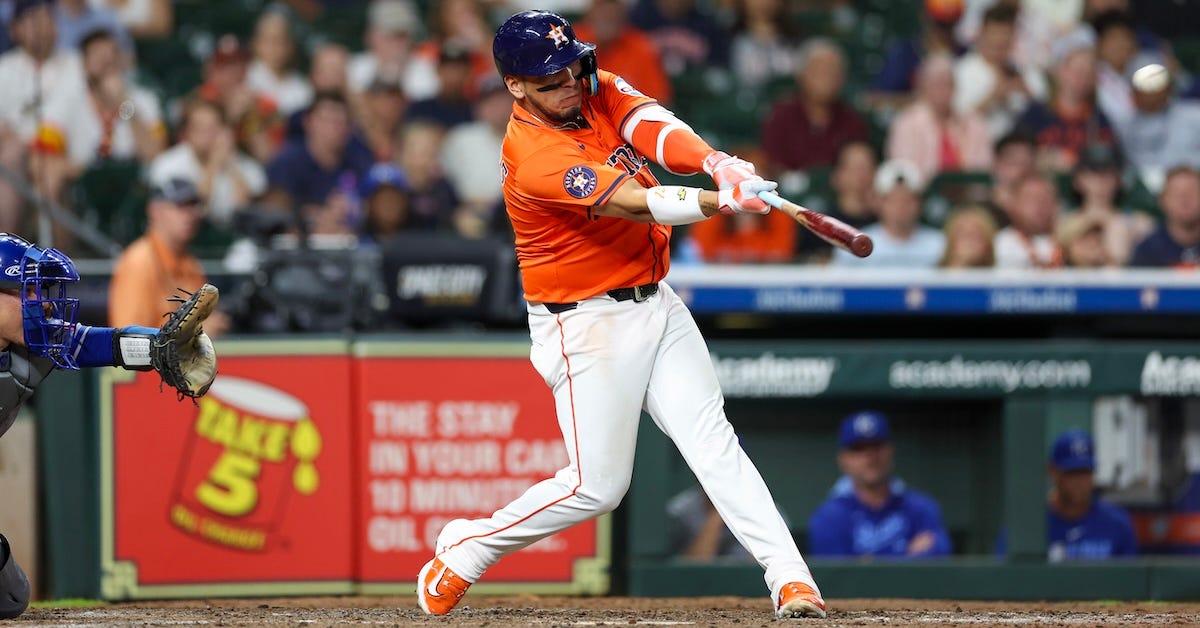
Enter Isaac Paredes — a legitimate, boring-good, spreadsheet-approved solution. Ninety-two career home runs. One bomb every 21 at-bats. A right-handed bat that wouldn’t melt into Fenway’s right-field shadows like half the lineup. On paper, it makes too much sense — which is exactly why the Red Sox can’t just do it cleanly.
Naturally, the assumption around baseball was simple: Boston has too many outfielders, Houston needs talent, Jarren Duran is the obvious trade chip, and everyone goes home moderately annoyed but satisfied.
Wrong. This is Red Sox baseball in 2026.
According to Astros insider Will Kunkel, Houston is not interested in Duran. Not “still talking.” Not “asking for more.” Straight-up no. Which immediately sends Red Sox Twitter into DEFCON 1, because if you’re not trading Duran, then who exactly are you trading — vibes?
Duran, for the record, is still the most polarizing player on the roster. Speed? Elite. Triples? Apparently his personal hobby. Power? Fine, not special. He’s an All-Star MVP, a chaos merchant on the bases, and somehow still treated like spare change in every trade discussion. He homers once every 39 at-bats — which is… fine. It’s not Paredes power. It’s “nice if he runs into one” power.
So if not Duran, who?
Here’s where it gets extra Red Sox-y.
Reports out of Houston suggest the Astros are more interested in Wilyer Abreu — yes, that Abreu. The one Houston originally signed, developed, and then casually tossed into the Christian Vázquez trade like an extra sauce packet.
Abreu came up, won a Gold Glove, posted a .781 OPS, and quietly became one of the most complete outfielders on the team. He also, inconveniently, hits left-handed — which means the Astros would be swapping lefty for lefty while Boston is still desperately searching for right-handed thump.
But here’s the twist: Abreu’s power profile actually does resemble Paredes more than Duran’s does. Abreu homers once every 22 at-bats. His WAR per 500 plate appearances? Higher than Duran’s. His OPS? Slightly better. Less chaos, more efficiency. More “front office approved.”
So of course Houston wants him.
From the Red Sox perspective, this is where the strategy shift becomes obvious. They’re no longer dangling the loud, flashy asset. They’re being asked for the quiet one — the guy who actually fits in Houston’s system, who they know, who they once developed, and who doesn’t require squinting at Statcast sliders to justify.
And that’s the problem.
If Boston trades Abreu, they’re weakening a strength to fix a weakness, while still not addressing the fundamental imbalance of this roster: too many lefties, not enough punch, and an obsession with versatility over intimidation.
Paredes would fix that. Instantly. Plug him at third base, drop him into the middle of the order, and stop pretending that “internal options” are going to scare anyone in October.
But if the price is Abreu plus something else? Now you’re in classic Red Sox territory — half-measures, asset shuffling, and convincing yourself that subtraction somehow equals progress.
Bottom line: the Red Sox aren’t pivoting because they want to. They’re pivoting because Houston told them to. And whether Breslow pulls the trigger or not will tell us everything about how serious this team actually is about winning — or if they’re still trying to win trades on spreadsheets instead of games on the field.
Because power bats don’t grow on trees.
And neither do fan bases with infinite patience.