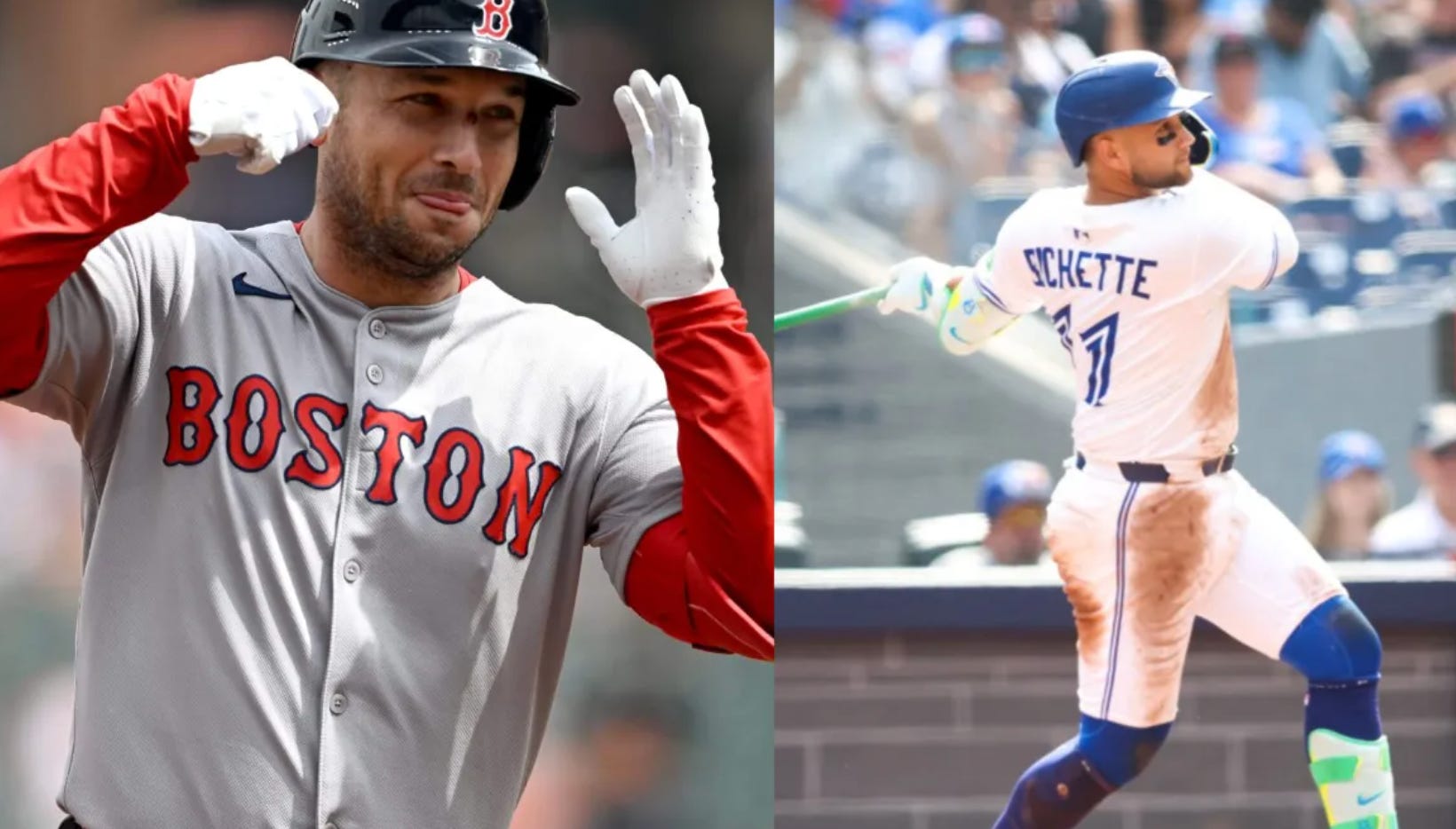
The Hot Corner vs. The Middle Infield: The Bregman-Bichette Dilemma
By Red Sox Digest
As the calendar turns to 2026, the Boston Red Sox find themselves at a crossroads that could define the next half-decade of baseball at Fenway Park. Chief Baseball Officer Craig Breslow has already been aggressive, securing arms like Sonny Gray and adding the veteran presence of Willson Contreras.1 But the “big fish” remains uncaught, and the debate in the front office—and across New England—has narrowed down to two names: Alex Bregman and Bo Bichette.
Both represent elite offensive upgrades, but they offer vastly different paths for the franchise. Let’s break down the case for each.
The Case for the Reunion: Alex Bregman
Bregman isn’t just a free agent target; he’s the incumbent. After a stellar 2025 in Boston where he slashed .273/.360/.462 with 18 home runs in 114 games, Bregman proved he could handle the pressure of the Fens.2
The “Adult in the Room”: Bregman was widely credited as the clubhouse leader for a young core featuring Roman Anthony and Ceddanne Rafaela.3 His two World Series rings carry weight that few others in the market can match.4
The Defensive Anchor: While Rafael Devers (now traded) provided the power, Bregman provided the stability. He finished 2025 as a top-10 defensive third baseman in terms of Outs Above Average (OAA).
The Fenway Fit: His pull-heavy, high-contact approach is tailor-made for the Green Monster.5
The Risk: Bregman is 31 and seeking a deal in the neighborhood of $180 million. With a history of soft-tissue injuries (including a quad strain that cost him seven weeks last year), the “back half” of a long-term contract could be a concern.
The Case for the Splash: Bo Bichette
If Bregman is the safe, veteran choice, Bichette is the high-ceiling spark plug. At just 27 years old, the former Blue Jay is coming off a massive bounce-back 2025, hitting .311 with 94 RBIs.6
Youth & Upside: Bichette is four years younger than Bregman.7 You aren’t just buying his past performance; you’re buying his prime.
Positional Flexibility: While he’s a natural shortstop, reports indicate Bichette is open to moving to second base.8 This is crucial for Boston, as it allows Trevor Story to stay at short and paves a clear path for top prospect Marcelo Mayer to slide into the infield mix.
Weakening a Rival: Signing Bichette doesn’t just help Boston; it tears the heart out of a Toronto team that just won the AL East.
The Risk: Bichette’s “free-swinger” profile can lead to cold streaks, and while his 2025 was elite, his 2024 was marred by injury and inconsistency.
Comparing the Impact
The Verdict: Who Should Breslow Choose?
The Red Sox have reportedly made an “aggressive offer” to bring Bregman back, and for good reason.9 He is the glue that held the 2025 roster together. However, the Blue Jays’ recent signing of Japanese star Kazuma Okamoto has complicated the market, potentially pushing Toronto to fight harder to keep Bichette or pivot to Bregman themselves.
If the Red Sox want to win the “now,” Bregman is the choice. He knows the system, the city, and the pitching staff. But if the goal is to build a sustained powerhouse that peaks in three years when the “Big Three” prospects are in their prime, Bichette’s age and offensive ceiling are almost impossible to ignore.
One thing is certain: the Red Sox cannot afford to leave this offseason without one of them. Doing so would be a “white flag” in a division that is only getting tougher.


